
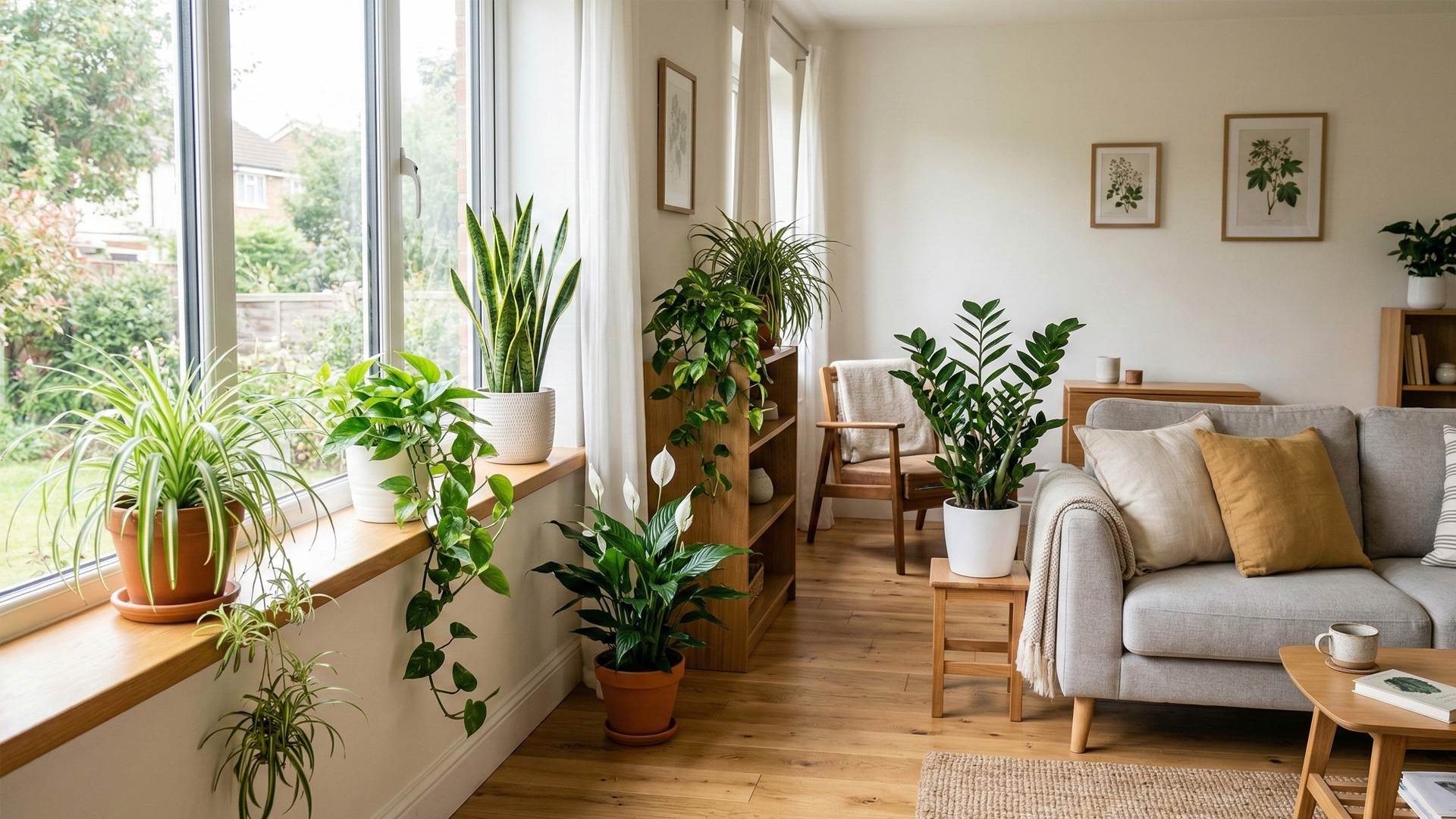
The best indoor plants for beginners are forgiving species that match your home’s light and thrive with simple, consistent care—success depends more on placement and watering habits than a green thumb. Find more practical gardening tips at Day to Day Gardening home.
What makes indoor plants for beginners “easy”?
Indoor plants that are ‘easy’ combine a light match, forgiving watering needs, and steady, predictable growth so beginners avoid surprise failures. Matching light matters because photosynthesis fuels plant health; watering mistakes are the most common cause of plant death. Choose tolerant, readily available species [1] [2].
What makes a plant “easy” for beginners comes down to three practical factors: a match between the plant’s light needs and your spot, a tolerance for occasional missed waterings, and a growth habit that’s predictable rather than explosive. Most beginner failures start with a poor site choice or too much water; plants that grow slowly or tolerate low light give you margin for error. Photosynthesis is the biochemical reason light matters — it drives carbohydrate production and overall vigor — so pick plants that can get what your room provides [1].
Easy plants also tend to be common and readily available at garden centers, which makes replacement, research, and community advice simpler. Beginner-friendly species often have resilient leaves (not delicate lace) and can handle occasional neglect. We picked species and routines based on tolerance, availability, and the ability to thrive under consistent, simple care — not miracles. Houseplants also add real quality-of-life value in a living room or office, so starting with reliable choices preserves that benefit rather than turning plants into clutter [2].
Most people blame an imaginary lack of talent; reality is simple: match light, stop overwatering, and pick tolerant species. That’s the strategy we recommend.
What light do indoor plants for beginners need?
Light for beginner indoor plants ranges from low to high—defined by window direction and daily duration—and matching a plant’s requirement to the spot is the single most important success factor. Low light slows growth and water use; supplemental lighting fills gaps when natural sun is insufficient [1].
Beginner plants fall into three practical light categories. Low light suits north windows or fairly dark corners and slows growth, so water less often. Medium light fits east windows or spots near west windows out of direct sun and supports steady growth. High light means south- or southwest-facing windows and encourages faster growth but raises scorch risk if plants are right against glass.
You should assess how many hours of usable light a spot gets during the day and choose plants whose needs match that measurement; selecting a plant for the place is the core success factor for beginners [1]. Many indoor plants prefer bright, indirect light for much of the day, and where natural light is lacking, supplemental lighting is a practical solution to keep plants healthy and growing [3] [1].
Indoor light levels: what they mean and where they work best
| Light level | Good location in the home | What to expect | Beginner tip |
|---|---|---|---|
| Low light | North window or fairly dark corner | Slower growth; uses less water | Feel soil before watering to avoid overwatering |
| Medium light | East window or near west window (out of direct light) | Moderate growth; may still dry slowly | If starting seeds, you may need artificial lighting |
| High light | South- or southwest-facing window | Fastest growth potential; risk of scorch if too intense | Watch for scorched/bleached leaves and move back from glass |
If a room is dim, consider a modest grow light rather than forcing a high-light plant into poor conditions. Supplemental fixtures come in many sizes and price points so you can add light only where you need it; this is cheaper and more effective than repeatedly rescuing sunburned or shaded plants [1].
Beginner setup checklist: pick the right plant (before you buy)
- Check your window direction and how many hours of natural light the spot gets
- Choose a plant whose light requirement matches that spot (low/medium/high)
- Plan a watering approach based on light (lower light = less frequent watering)
- Decide if you need supplemental lighting in darker rooms
- Choose a container with drainage and buy a saucer to protect surfaces
Which are the 10 best indoor plants for beginners?
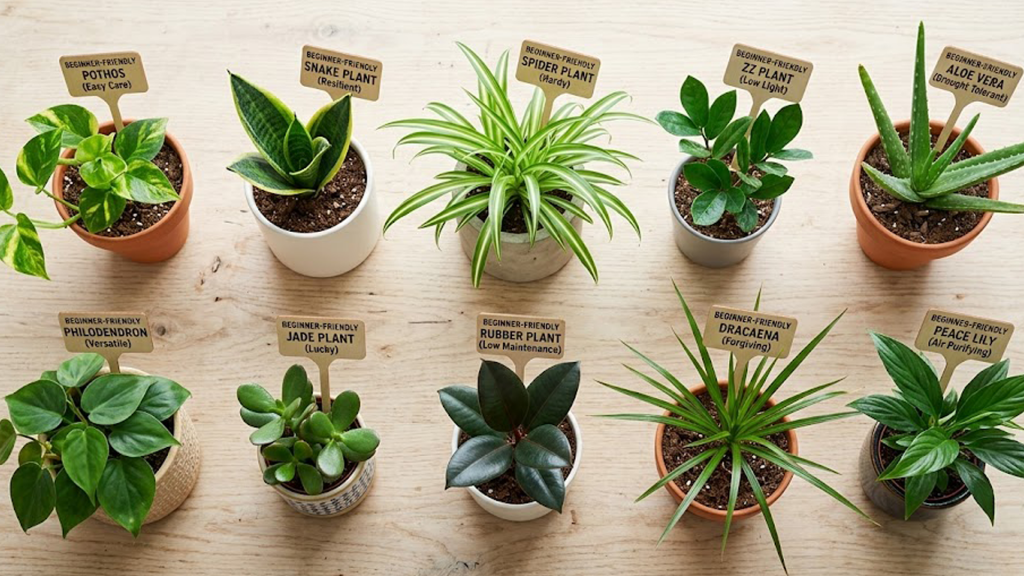
The 10 best indoor plants for beginners are species that tolerate lower light, resist brief neglect, and respond well to consistent watering routines; grouping them by low, medium, and high light keeps choices practical. Each pick here is common, easy to find, and suits a clear care baseline [3].
For many beginners, the right starter set is one low-light plant, one medium-light plant, and one high-light plant. That gives coverage for most rooms and makes learning how light changes across seasons straightforward. For readers who want more plant ideas and inspiration, check our wider selection at Flowers & ornament gardening.
Top 10 beginner picks (grouped by typical indoor light tolerance) — care baseline is the same simple rule for all: “water when the top inch of soil is dry.” Common mistake warnings are short and actionable.
Low-light tolerant
- Snake plant — low light; water when top inch is dry; avoid sitting in water (common mistake: overwatering).
- ZZ plant — low light; water when top inch is dry; avoid wet soil (common mistake: too-frequent watering).
- Cast iron plant — low light; water when top inch is dry; don’t rush repotting (common mistake: transplant shock).
Medium-light favorites
- Pothos (Devil’s ivy) — medium light; water when top inch is dry; common mistake: keeping in very low light and expecting variegation.
- Spider plant — medium light; water when top inch is dry; common mistake: soggy soil.
- Heartleaf philodendron — medium light; water when top inch is dry; common mistake: letting foliage touch cold windows.
High-light choices
- Aloe vera — high light; water when top inch is dry; common mistake: placing in low light and overwatering.
- Ficus or small ficus cultivar — high light; water when top inch is dry; common mistake: sudden moves across the room.
- Geranium (indoor) — high light; water when top inch is dry; common mistake: keeping in too-low light which causes legginess.
These picks reflect the principle: match the plant to the place and maintain a straightforward watering routine. Most of these species are common and forgiving, which helps beginners build confidence quickly [3].
Quotable passage:
Bright, indirect light is ideal for many houseplants: most indoor species perform best with roughly six to eight hours of bright, indirect light per day. When natural exposure falls short, supplemental lighting is a practical solution to provide consistent energy for photosynthesis and steady growth [3].
How do you know if your houseplant is getting enough light?
Houseplant light sufficiency shows in leaf color, stem shape, and growth rate; pale leaves, leggy stems, and leaf drop signal too little light while scorched or bleached leaves indicate too much. Regularly inspect foliage and node spacing to assess light and adjust placement or lighting within weeks [1].
Too little light produces clear signs: pale or yellowing leaves (reduced chlorophyll), long thin stems reaching toward light, longer spaces between nodes, leaf drop, and loss of variegation where variegated plants revert greener. Too much light shows as scorched or bleached leaves with burned patches. Use visual diagnosis over 2–4 weeks and then adjust placement slowly.
Beginner troubleshooting: common light-related symptoms and what to do
| Symptom | Likely cause | What it looks like | Quick fix |
|---|---|---|---|
| Leggy stems | Too little light | Long, thin stems reaching toward light | Move closer to brighter light or add supplemental lighting |
| Pale/yellow leaves | Too little light (reduced chlorophyll) | Leaves turn pale green to yellow to white | Increase light gradually; reassess placement |
| Leaf drop | Too little light (often older leaves) | Leaves falling off, especially older leaves | Increase light; reduce watering frequency |
| Scorched/bleached leaves | Too much light | Burned-looking patches or bleaching | Move to bright indirect light; avoid harsh direct sun |
Quick fixes include moving the plant closer to brighter light, rotating plants so all sides get exposure, or adding a supplemental light if windows aren’t enough. If leaves look scorched, move the plant a bit back from direct sun. For legginess or pale leaves, shift toward brighter, indirect light and be patient — recovery takes weeks.
Fast fixes checklist: when your plant looks unhappy
- If stems are leggy, increase light or move closer to a window
- If leaves look scorched/bleached, reduce direct light exposure
- If growth is slow in low light, water less often (plants use less water)
- If variegation fades (reverts greener), increase light gradually
- Re-check placement after seasonal changes (winter vs. summer light)
How often should beginners water indoor plants?
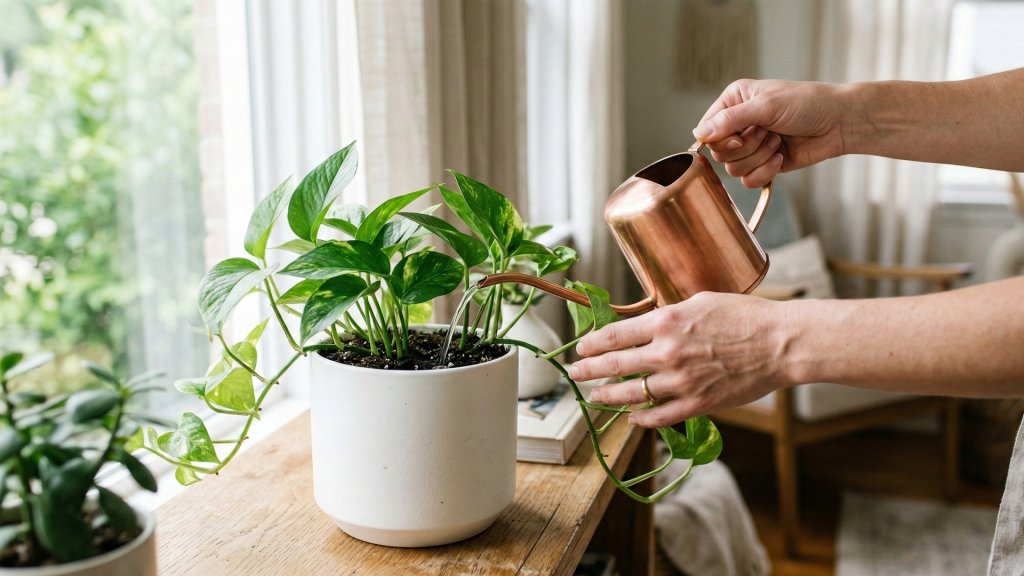
Watering frequency depends on light-driven growth: in lower light, plants use less water and need less frequent watering. Always check the soil and water thoroughly only when the top inch is dry; this feel-first routine prevents beginner overwatering and keeps roots healthy.
Light drives growth and therefore water use: lower light slows photosynthesis and growth, so plants use less water and are at greater risk of overwatering. The simplest routine for beginners is tactile: push a finger into the top inch of potting mix; if it’s dry, soak the pot until water drains, then let it dry again. Over time you’ll notice seasonal and location differences and adapt accordingly.
Quotable passage:
Houseplants add a living touch to indoor decor and can lift spirits while improving indoor ambiance. Choosing easy species and placing them where they’ll thrive preserves those benefits; starting with tolerant, low-maintenance choices keeps the home feeling alive instead of turning plants into decorative failures [2].
Frequently Asked Questions
What is bright, indirect light?
Bright, indirect light is bright room light that never receives harsh midday sun; it’s common near east windows or a few feet back from south-facing glass. Many indoor species prefer this level for roughly six to eight hours a day to sustain steady growth without leaf scorch [3].
Can I grow indoor plants in a room with no windows?
A room with no windows requires supplemental lighting to support living plants; natural light is required for photosynthesis and without it plants cannot make energy. Practical grow lights come in varied sizes and prices to fit small rooms and can replace insufficient natural sunlight [1] [1].
Why is my plant turning yellow and growing tall and thin?
Yellowing combined with tall, thin stems (legginess) is classic low-light stress. Reduced chlorophyll causes paler leaves, and plants stretch toward light, producing long internodes. Move the plant to a brighter spot or provide supplemental light, and reduce watering until growth steadies [1].
Do variegated plants need more light than green plants?
Variegated plants have less chlorophyll in the pale leaf areas, so they often need brighter conditions than fully green varieties to maintain variegation. If variegation fades, increase light gradually and reassess placement to preserve the leaf patterns [1].
When should I consider a grow light?
Consider a grow light when a desired spot gets insufficient natural hours of bright, indirect light, or when you have a windowless room. Supplemental lighting is practical and affordable and will sustain photosynthesis where natural sun can’t meet plant needs [1] [3].
Research Gaps
Research gaps remain in species-specific indoor light thresholds and precise hour-by-hour energy needs for each common houseplant; most guidance is general and site-based. Quantifying how many exact hours of bright indirect light each species needs indoors and long-term effects of low-level supplemental lighting are still under-documented.
Practical unknowns include the interaction of typical indoor humidity and light for variegated cultivars and standardized watering cadences tied to lamp output; those would help refine care beyond the current, effective rule-of-thumb approach.
Conclusion: start simple, match the light, and let the plant teach you
Start simple: pick plants that match your room’s light, use a feel-the-soil watering routine, and observe changes for two weeks to confirm placement. Matching plant and place reduces failure and makes plant care predictable, which is the reliable route to success for beginners [1].
Two-week observation plan:
- Week 1: Place new plant, note leaf color and stem posture, water only if the top inch is dry.
- Week 2: Reassess light signs and rotate or move if you see pale leaves or leggy growth.
Next steps: once you’ve had one or two successes, expand your collection with similar light needs. For more beginner guides and practical how-tos, explore the Day to Day Gardening blog.
Quotable passage:
Light-driven care is simple to learn: measure your window exposure, choose species that match, and water by feel. Those three steps cut the majority of beginner failures and move plant ownership from guesswork to repeatable routines. Practical success is about placement and consistency, not innate talent.
Leave a Reply